
Asthma Triggers: Causes Of Asthma Attacks
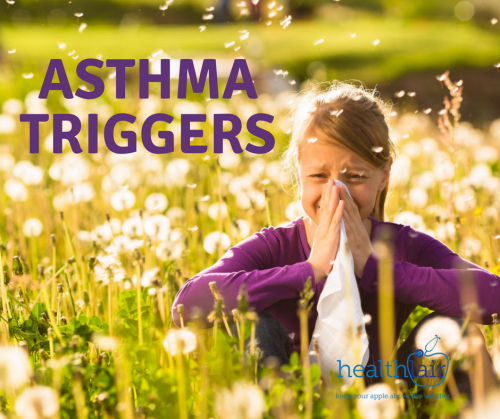
Asthma Triggers and Causes Of Asthma Attacks | HealthLair

The World Health Organization estimates that about 235 million people worldwide have Asthma.  So you are NOT alone if you are dealing with this yourself. Why have I decided to write about this? My mom has Asthma; my sister has Asthma, so does my brother in law and my nephew.  My nephew has been hospitalized multiple times for his Asthma. When he was younger, his symptoms were much much worse.  He is 8 years old, and his Asthma is very well controlled now. Fewer episodes, quicker resolution of symptoms, and I think this is because of many factors.  First off, my sister is phenomenal. She was always on top of his medications, the timing, the amount. She tracked how often he had episodes, how severe, how often she had to give him his meds.  All of this information is crucial for doctors (in this case, his pediatrician). See More at Post Traumatic Stress Disorder (PTSD). All these things determine the severity of the symptoms and which medications need to be added, changed, or removed.  This is why paying attention to all these things is very important.   Another factor, my nephew was taken to an allergy specialist and was tested for possible allergens.  Why was this an important step?  Allergies can frequently trigger an episode of Asthma.  But I will get into those ‘triggers’ in a minute.  Having so many family members with Asthma, I consider myself extremely lucky not to have it, although there have been times when I have felt my chest close up when I am exercising hard in cold weather.  Another trigger? Hmm, let’s get into it after I discuss Asthma and its symptoms. What does an asthma attack or episode look like? https://youtu.be/-A6aRqi7g_4 Difficulty breathing and WHEEZING! It can be accompanied by chest tightness and some pain due to lung inflammation.  An essential feature of Asthma, especially in children, is a cough present at night when they are asleep.  The cough will wake them up. This is an important piece of info for parents to keep an eye out for, especially if they have Asthma. What Causes Asthma?    No one knows the exact cause.  There is a genetic component.  If parents or sisters have Asthma, the child is more likely to have it.  If the child has any other allergic conditions like atopic dermatitis (eczema) or allergic rhinitis (hay fever), they are also higher risk. Some environmental factors can increase a person’s risk of having Asthma.  Exposure to cigarette smoke as a baby or child is a huge risk factor for developing Asthma.  Being a smoker or being overweight can also increase your risk of having Asthma. What about triggers? What will trigger an attack or episode? This is the most essential part of this article.  Why?  Many people with Asthma already know they have it, and they take medication. However, not everyone will know what caused or triggered the event.  I will list a few things here that can trigger asthma symptoms.  Some are obvious, but others are not that obvious and maybe not very well known. Allergies Dust, carpets, mold, pets (not their fur.. their skin… flaky skin known as pet dander will cause the allergic reaction and induce Asthma), dust mites, and cockroaches too Pollen, grass, and flowers Tobacco smoke Any kind of irritant at work Pollution Viral infection, or the flu There are a lot! It’s nearly impossible to avoid them all! BUT it is crucial to notice which ones triggered you or your family members so you can begin to predict an episode. There are other triggers too. Cold air Extreme emotions (anxiety, panic attacks, anger, laughter) Exercise! What if you only get symptoms during the week and never have them during the weekends?  Consider Occupational Asthma This is Asthma associated with work. There is something in your work environment that is triggering your Asthma, and its something to look into. What if you’re exercising and suddenly feel chest tightness, cough, and wheezing? Could be Exercise-Induced Asthma It can be treated and prevented! Which is why I am mentioning it here. It doesn’t mean work out less, or less intense or avoid exercise at all.  It means see your doc and get your medication and instruction on how and when to take them so you can still get that run in. Overall Asthma is a chronic condition. Usually starts in childhood, maybe even teenage years.  In the USA alone about 25 million people have asthma, and of those, 7 million are children.  Boys have it more than girls but once they’re adults equal men and women have.  Some may have severe asthma that needs daily medications regardless of whether or not they have an episode.  Others have minimal symptoms and only use the inhaler when needed.  Symptoms can get better as the years go by, and even disappear.  They can also get worse.  They can also come back as people get older even after the person had been asthma free for years. Asthma has become a public health issue in both developed and developing countries.  According to the WHO, 80% of fatalities due to Asthma are occurring in developing countries.  If this wasn’t a reason to write about this, then let’s get a little more personal. My mom has Asthma.  This is a bit of a side note, but if you follow me on IG, you would have seen that a while back, I got a French bulldog, her name was Sammy. She was all cream. And then she disappeared from my stories and was never spoken about again. Why? A few months ago, my family and I had just returned from Cartagena.  The humidity and mold of the old buildings started taking a toll on my mom’s lungs.  Then, she got a viral infection.  When we got back, my mom had already been exposed to two triggers: mold (she’s allergic to it) and viral infection.  When we bought the dog, she became the third trigger.  It sent my mom into a full-blown asthma attack.  She

Benefits of Olive Oil and Sesame Oil in our Life

Benefits of Olive Oil and Sesame Oil in our Life | Benefits of Sesame Oil

BUT WHICH ONE??? The choices are plenty.. so which one should you choose?  There is Olive oil or, as one of my favorite Food Network ladies, says, “EVOO” – “Extra Virgin Olive Oil” – Rachel Ray a little Oil to your life! We also have Sesame Oil and Coconut Oil.  I have heard so many things about why one of these is better than the others, why you should cook with some but not all, why cooking with one is bad etc. The advice is endless, so instead of being another person to give you information on this, I’d rather lay out what you should know about each of these delicious oils, and then you can decide for yourself which to use.  I will also tell you which ones I use, maybe only one, perhaps just two, maybe all three… perhaps none? Who knows! Keep reading to find out. check out more “What the Health” 7 Conclusions Part #1 Lets Start with Olive Oil As shocking as this sounds, in 2015, the world consumed a record of 3,295,911 tons of olive oil! OMG, that’s a lot of EVOO! According to a cool website called Olive Oil Times, the top three consumers of olive oil are 1) Italy, 2) Spain 3) the United States.  It looks like we’re not #1 in everything, Jaja! (jaja= Hispanic version of haha.. just a little side note)  So in what foods is olive oil most used? Mediterranean meals!  I myself use olive a lot too. Love the added taste, love the texture it gives a salad. But mostly, I love that it’s high in GOOD fats (monounsaturated and polyunsaturated).  https://youtu.be/bWrMPhPXHr4 These are the two fats you want to see on a label of anything you consume.  It does have some BAD fat (saturated). About 1.9g, but its very small compared to the amount found in another oil listed above, which I will talk about in a second. A lot of people worry that heating oils such as olive oil to cook will increase another BAD type of fat  (Trans Fat).  A study was conducted, and it turned out that the amount of trans fat produced after the heating process like in a ‘stir fry’ style was so low it could be declared as 0 trans fat.  According to the Food and Drug Administration (FDA), if a food has less than .5g of trans fat, it can be declared as 0 trans fat.  So that’s some useful info there.  But I’m sure you guys all know the benefits of olive oil. They’ve been publicized for a long time, but I’ll write them in any way. It lowers cholesterol, triglycerides (TAG or TGs), LDL (which is the BAD fat), weight, BMI, all while increasing HDL (GOOD fat). So, high properties overall! Next, let’s talk about coconut oil. Why? Well, someone once told me that cooking with coconut oil was cancerous. So I decided to look into this myself and see what I could find. I’ve never used coconut oil, but it’s only because I love sesame and olive oil. Someone also asked me if coconut oil was better than the others.  Coconut oil has more saturated fat than the other two. It has around 13g of saturated fat.  Although promoted as a very healthy oil with cardiovascular benefits, the American Heart Association suggested that it should not be regarded as a better form of saturated fat. What does this mean? Too much coconut oil is as bad an eating other items with the same amount of saturated fat. A systematic review (which is a combination of studies pooled together to give the results of an education more power) on coconut oil and cardiovascular disease concluded that coconut oil raises both HDL (GOOD) and LDL (BAD), but not as much as butter.  The study results were unable to support the claim that coconut oil is healthy and would have cardiovascular benefits. Although it does say that more research is needed, take away? It has more saturated fat (BAD) than the others, so consume more sparingly as you would any other item high in saturated fat.  Not enough is known yet; it’s a relatively new trend. I’ll keep looking for further info! Promise! Lastly, sesame oil. I love this stuff! I put it in all my salads, and use olive oil only when I’ve run out of sesame oil! I don’t know why.  There’s a taste that I love, and I can’t put my finger on it.  I also put a drizzle of in over my tofu or quinoa. I LOVE LOVE LOVE IT. So what’s in it?  Like olive oil, it has monounsaturated fats and polyunsaturated fats  (Shortened to MUFAs and PUFAs. I always laughed at this when I was in medical school. Somehow, I remembered they were the good guys).  It has the same amount of saturated fat as olive oil too. 1.9g. Now, research has found that it has similar effects as olive oil with a little difference.  It has a more substantial impact on cholesterol, TAGs, and LDL than olive oil.  It also lowered weight and BMI while increasing HDL.  Note that it had a more substantial effect than olive oil on a few things. Can you cook with sesame oil? Someone told me you don’t. That it’s just a seasoning, I have never used it to prepare, but not because I thought I couldn’t.  Since someone said don’t, I decided to look into that! I’m curious, what can I say! One study found that cooking sesame oil increases sesamol, which is an anti-oxidant in sesame oil.  We know the benefits of anti-oxidants as being anti-aging, anti-cancer, and anti-plaque building in the arteries (anti-atherosclerosis).  All good.  Is that all? Another study found that patients with high blood pressure who consumed sesame oil lowered their blood pressure to normal levels (both top and the bottom number, aka systolic and diastolic). When the sesame oil was removed from their diets, their blood pressure rose again.  In people who take blood pressure meds like diuretics and beta-blockers, sesame

Let’s Stay Connected

Stay Inspired & Keep Learning

Subscribe to receive exclusive health tips, new blog updates, and the occasional wellness surprise — no spam, just real value.